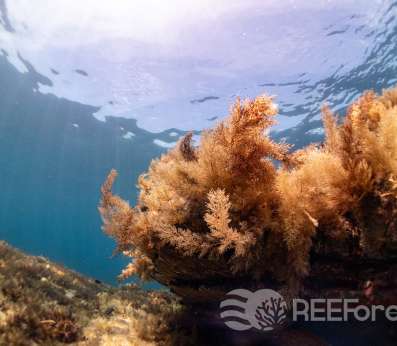
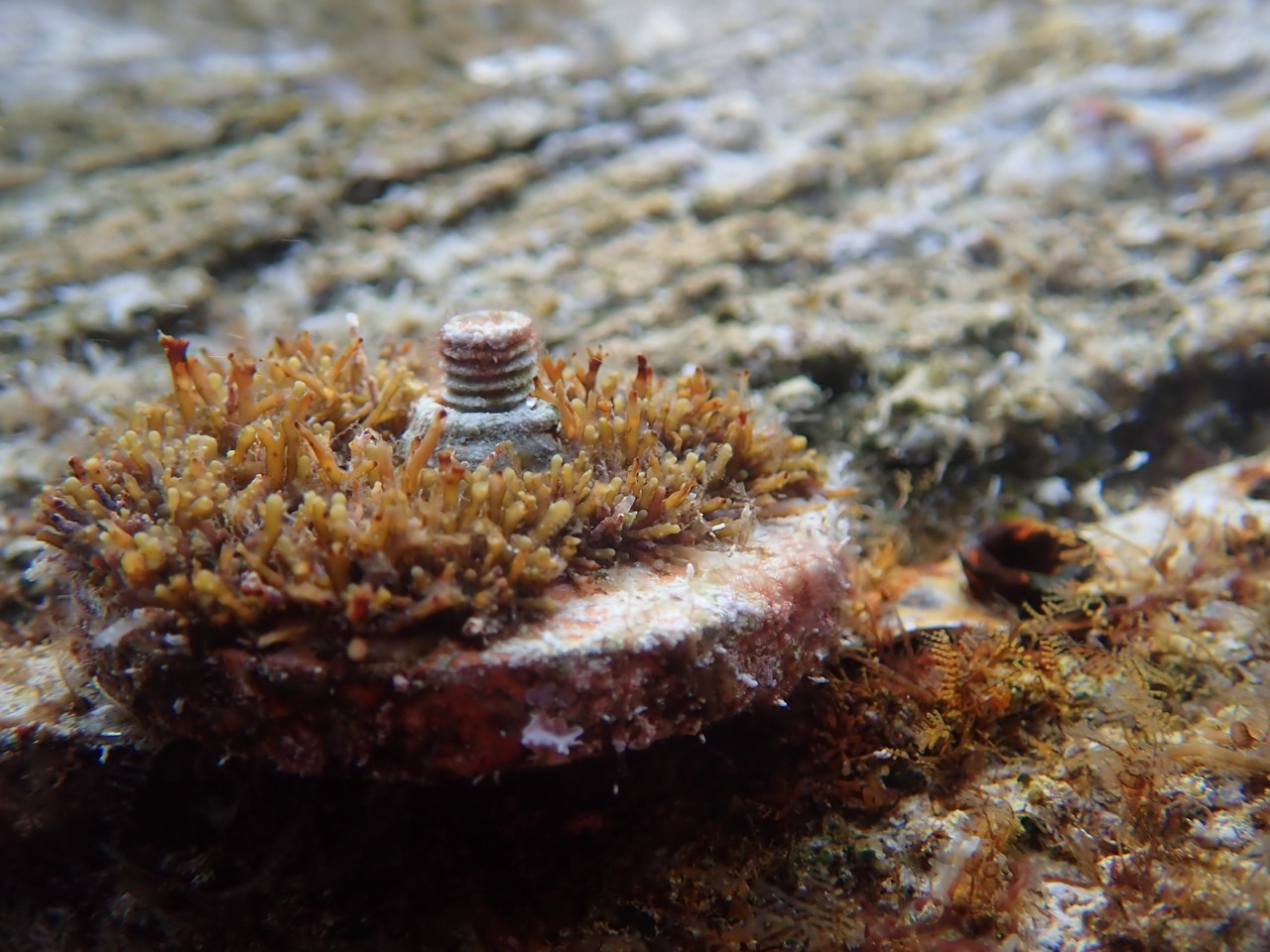
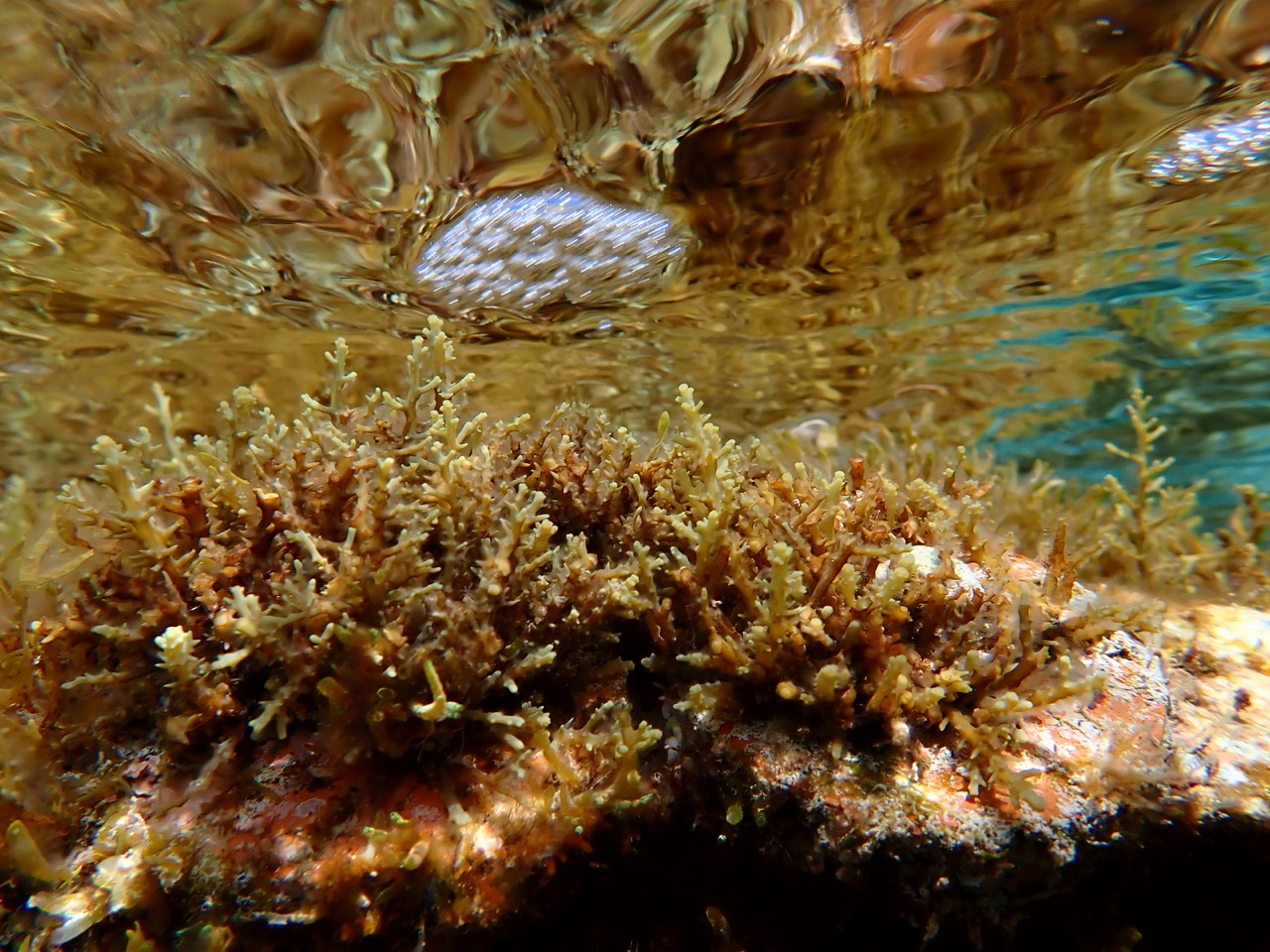
In June 2024, we successfully carried out the first outplanting of Ericaria amentacea at Gyaros Marine Protected Area — a milestone for the HCMR team. This achievement was especially significant in contrast to the situation in 2023, where the limited reproductive capacity of Cystoseira s.l. species at donor sites prevented cultivation.
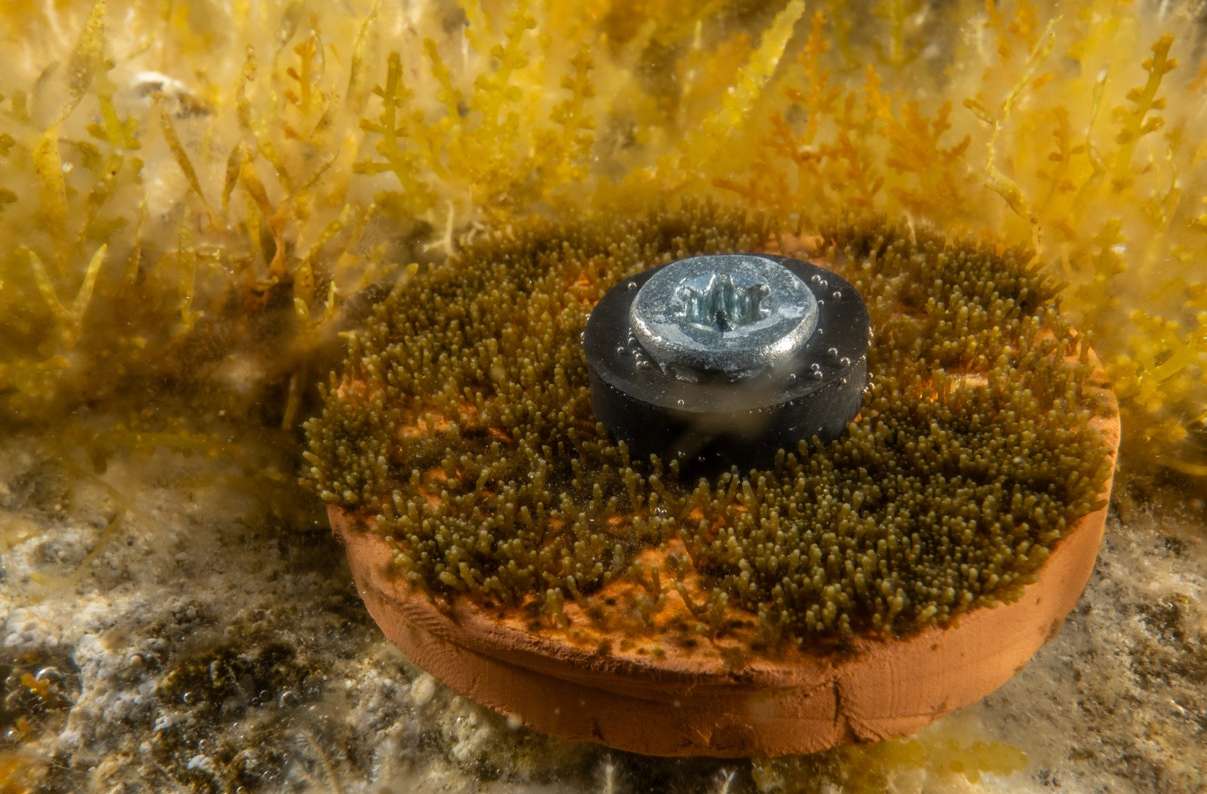
Over four days, 518 restoration units (RUs) were carefully placed on the rocky reefs, each one hosting lab-cultivated juveniles of Ericaria amentacea. At the time of deployment, the young algae measured just 0.3 cm in length — tiny, but noticeable with a close look, and already carrying the promise of new life.
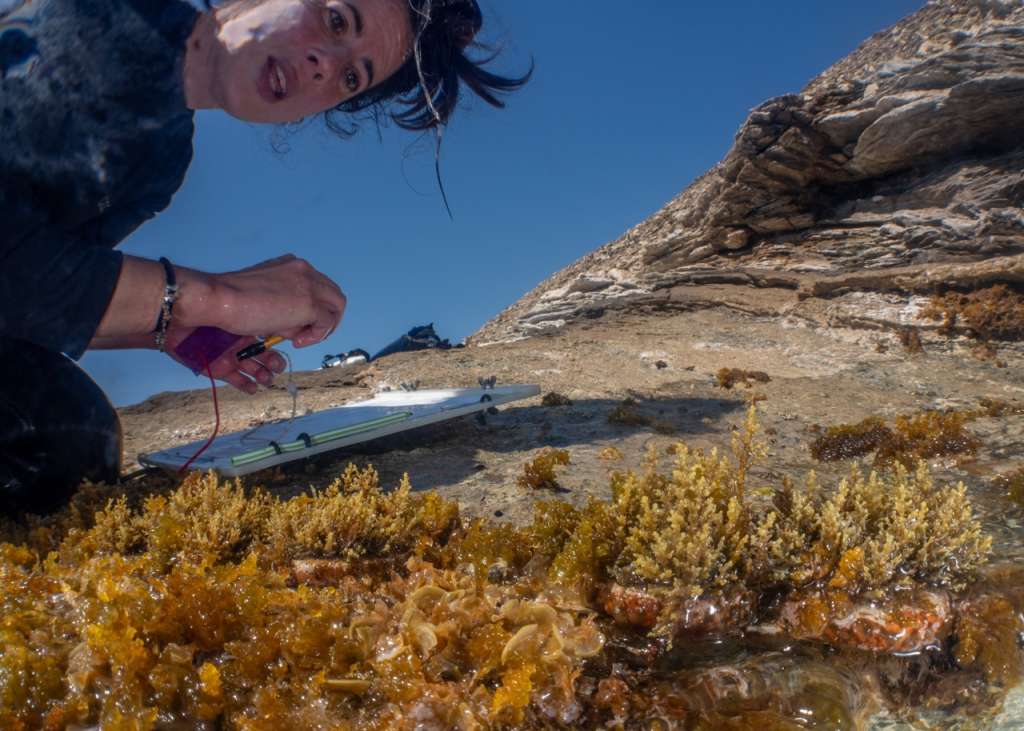
The effort was not without its challenges. An unexpected malfunction of our underwater drill meant we had to quickly adapt, securing the units using alternative methods. Still, the work was completed, marking the beginning of a long observational journey.
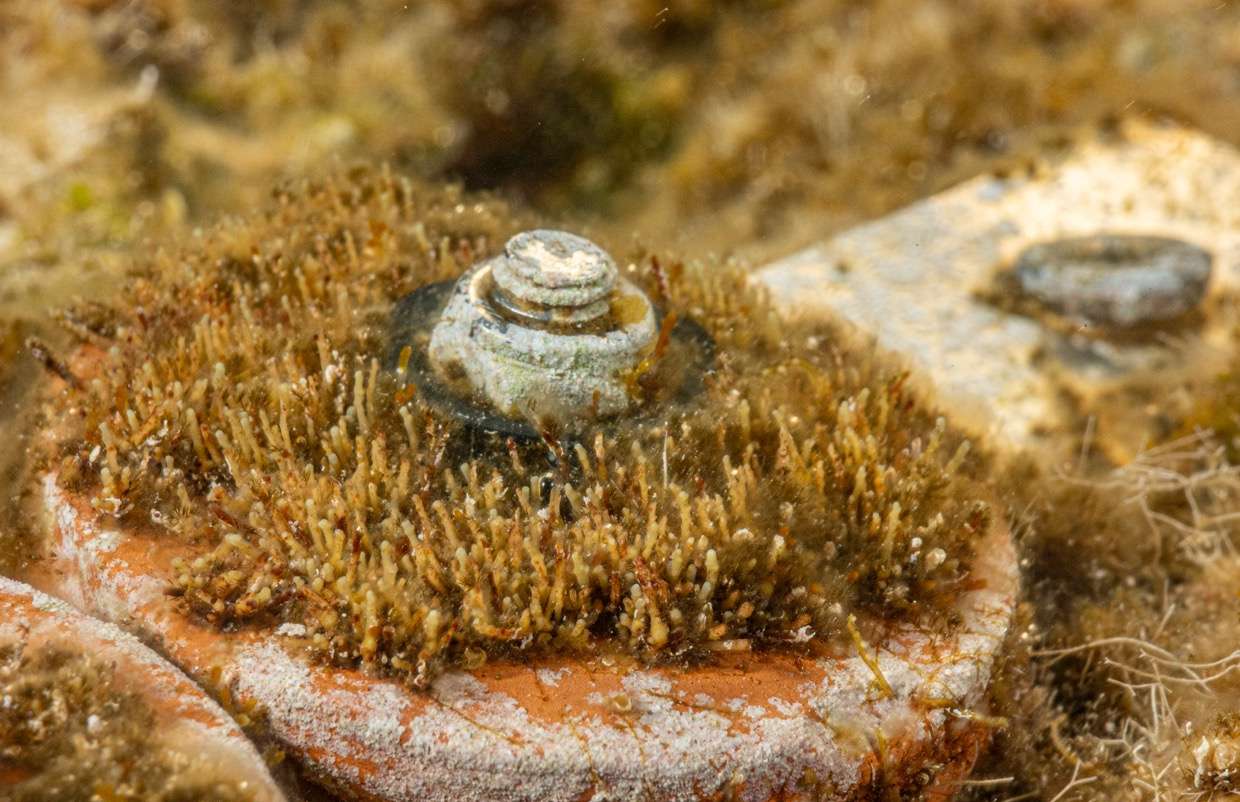
Our first monitoring trip took place in early September 2024 — three months post-outplanting. The juveniles had reached a maximum length of 1 cm, showing slow but steady progress. By January 2025, seven months in, they measured up to 1.5 cm. Growth remained modest through the winter, as expected.
Then came spring. At our third monitoring in April 2025 — ten months after deployment — we observed a noticeable boost: the juveniles had grown up to 4.5 cm in length. This spring surge suggests that seasonal factors, like increased light and temperature, may play a significant role in their development.
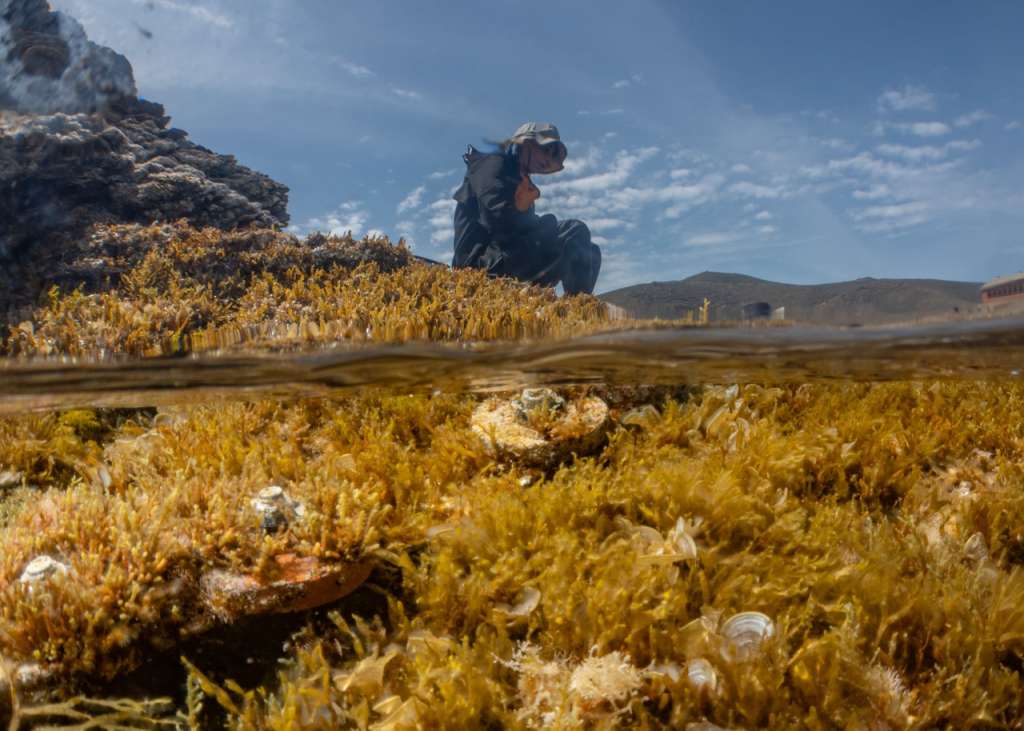
While it’s still early to claim success, these observations are promising. They help us better understand the dynamics of outplanting.
Restoration is rarely linear, and outcomes are never guaranteed — but each season brings new lessons, and each centimeter of growth brings us one step closer to restoring what was lost.
Text and pictures credited to HCMR.