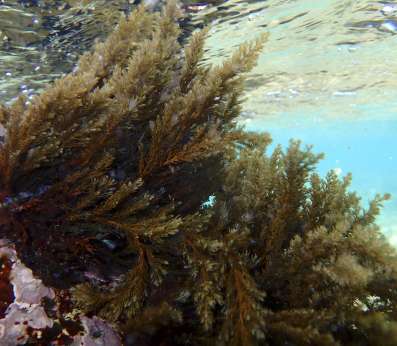
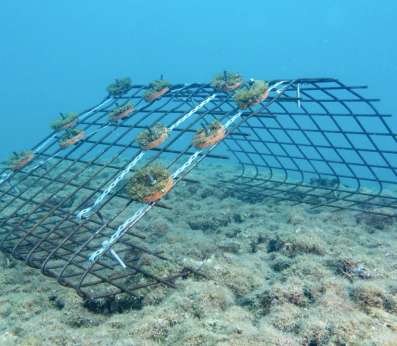
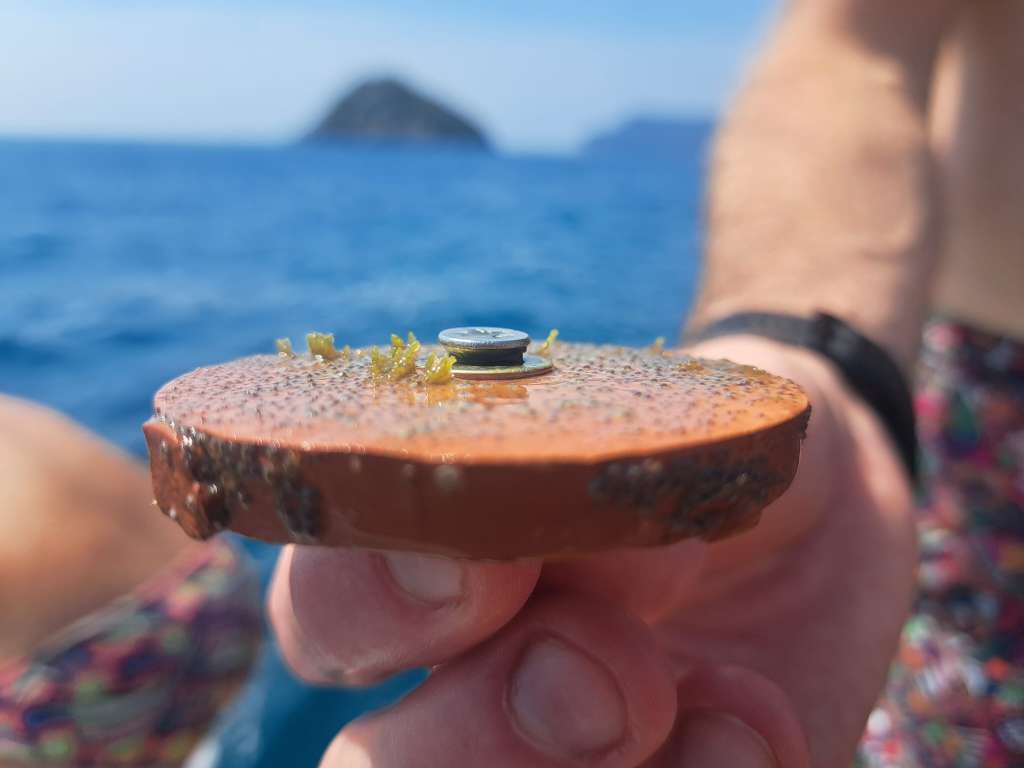
During the summer season, the fourth phase of ecological restoration of Ericaria amentacea was carried out in the Isola di Bergeggi Marine Protected Area with the team from the Department of Earth, Environmental and Life Sciences at the University of Genoa as part of the LIFE REEForest project. The work took place at Punta Predani, the recipient site identified for the ecological restoration activities. On this occasion, approximately 200 new tiles containing young specimens of Ericaria amentacea were produced in accordance with the protocol developed and optimised by the project and placed on site to compensate for the loss of some of the tiles planted in previous years and subsequently removed by severe sea storm surges.
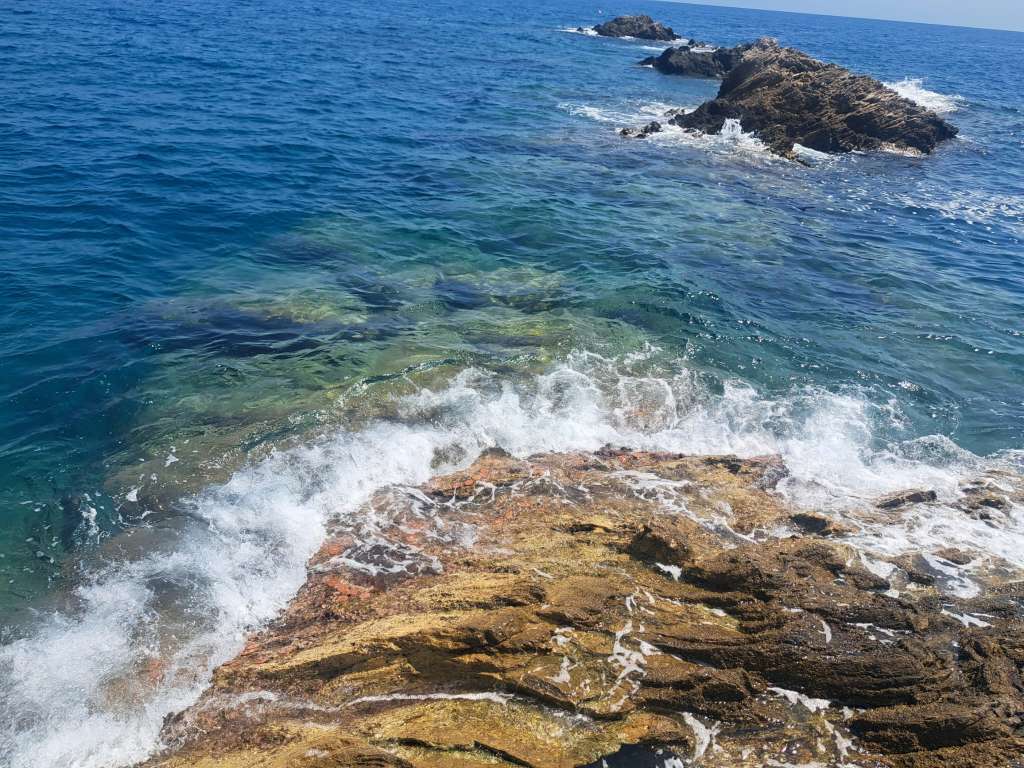
Extreme marine weather events, such as exceptional storm surges and heatwaves, represent one of the main challenges to the success of coastal habitat restoration projects. The continuous monitoring of restored areas makes it possible to assess the effectiveness of the techniques employed, identify any critical issues and plan compensatory measures, thereby helping to increase the resilience of restoration efforts in the long term.
This fourth activity confirms that ecological restoration is a process of adaptive management, in which operational strategies are constantly updated on the basis of evidence gathered during monitoring. The increasing frequency and intensity of extreme events linked to climate change – such as the exceptional storm surges that have affected the Ligurian Sea in recent years – make it necessary to develop protocols that are increasingly effective and resilient, capable of ensuring the success of restoration projects even under increasingly variable environmental conditions.
The above can also be said of climatic anomalies. The summer of 2026, characterised by sea surface temperatures that were persistently higher than the climatological average from as early as May, represents an important opportunity to assess the response of both natural populations and young transplanted populations to conditions of severe thermal stress. This monitoring will enable the collection of key data on the survival, growth and adaptability of the restored individuals, helping to improve future strategies for the conservation and restoration of Ericaria amentacea forests.
The information gathered as part of the LIFE REEForest project therefore serves not only as a tool for assessing the effectiveness of the interventions carried out at Bergeggi, but also as a scientific basis for defining restoration protocols that are increasingly robust and transferable to other contexts across the Mediterranean, where the effects of climate change are rapidly altering the environmental conditions and the prospects for the conservation of marine habitats.